
As businesses and services increasingly move online, ensuring equal access to digital platforms has become essential. The concept of ADA website accessibility focuses on making websites usable for individuals with disabilities, ensuring they can access information, services, and features without barriers. This is not just a matter of usability—it is also a legal requirement under U.S. law.
Organizations that fail to prioritize accessibility may face legal risks, reputational damage, and lost opportunities to engage a broader audience. Understanding the fundamentals of ADA compliance is therefore critical for modern businesses and website owners.
What Is ADA Website Accessibility?
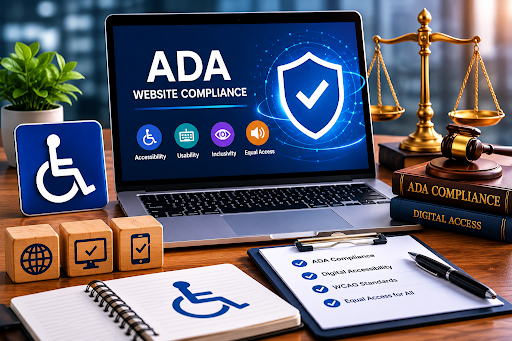
ADA website accessibility refers to designing and developing websites in a way that allows people with disabilities—such as visual, auditory, motor, or cognitive impairments—to use them effectively. This includes compatibility with assistive technologies like screen readers and ensuring that content is perceivable, operable, and understandable.
The Americans with Disabilities Act (ADA) requires that businesses and public entities provide equal access to their services, including those offered online.
Although the ADA does not specify exact technical standards for websites, it emphasizes nondiscrimination and effective communication for all users.
Legal Framework Behind Website Accessibility
Several laws and guidelines shape website accessibility requirements:
Americans with Disabilities Act (ADA)
The ADA applies to both government entities (Title II) and businesses open to the public (Title III). It requires that individuals with disabilities have equal access to services, including those delivered through websites.
Section 508 of the Rehabilitation Act
This law applies to federal agencies and requires their websites to be accessible to people with disabilities.
Web Content Accessibility Guidelines (WCAG)
WCAG is the most widely accepted standard for web accessibility. Courts and regulators frequently reference WCAG 2.1 Level AA as the benchmark for compliance.
Recent updates also reinforce these standards, with government websites required to meet WCAG 2.1 Level AA under new rules finalized in 2024.
Why ADA Website Accessibility Matters
Ensuring accessibility is not just about legal compliance—it also has broader benefits:
Equal Access for All Users
Accessible websites allow individuals with disabilities to participate fully in digital activities, from shopping to accessing services.
Legal Protection
Thousands of lawsuits related to website accessibility are filed annually, making compliance a critical risk management strategy.
Improved User Experience
Accessibility features often enhance usability for all users, including those on mobile devices or slow internet connections.
Expanded Audience Reach
By making websites inclusive, businesses can reach a larger and more diverse audience.
Common Accessibility Features
To achieve ADA compliance, websites typically incorporate several key features:
Alternative Text for Images
Providing descriptive text for images ensures that screen readers can convey visual content to users who are blind or visually impaired.
Keyboard Navigation
Websites should be fully navigable using a keyboard, allowing users with motor impairments to interact with content.
Captioned Media
Videos should include captions to make them accessible to individuals with hearing impairments.
Clear Structure and Labels
Proper use of headings, labels, and navigation improves accessibility and usability.
These features align with WCAG principles and help ensure compliance with ADA requirements.
Risks of Non-Compliance
Failing to meet accessibility standards can lead to significant consequences:
Legal actions and financial penalties
Damage to brand reputation
Loss of potential customers
Increased costs due to retroactive fixes
As digital accessibility becomes more regulated, businesses are under increasing pressure to ensure compliance proactively.
Role of Legal Guidance in ADA Compliance
Navigating ADA website accessibility requirements can be complex, especially given evolving regulations and varying interpretations by courts. Many organizations seek legal assistance to ensure their websites meet compliance standards and to mitigate risks.
Working with professionals experienced in ADA accessibility for websites services can help businesses understand their obligations, conduct audits, and implement necessary changes effectively.
Legal experts can also provide guidance on responding to complaints or lawsuits, ensuring that businesses remain compliant and protected.
Best Practices for Achieving Compliance
To maintain ADA-compliant websites, organizations should follow these best practices:
Conduct regular accessibility audits
Follow WCAG 2.1 Level AA guidelines
Train development teams on accessibility standards
Test websites using assistive technologies
Continuously update and monitor accessibility features
Proactive compliance not only reduces legal risks but also improves overall website performance and user satisfaction.
Conclusion
ADA website accessibility is an essential aspect of modern digital presence, ensuring equal access for all users while helping businesses meet legal requirements. Taking a proactive approach with the support of experts in ADA website compliance attorney services can help ensure long-term compliance, reduce legal risks, and enhance the overall digital experience for every user. By implementing accessibility standards and staying informed about evolving regulations, organizations can create inclusive and user-friendly websites.






Write a comment ...